Learning to surf in Morocco as a complete beginner is very achievable, and the coast around Taghazout is a friendly place to start. In your first week you’ll learn ocean safety, paddling and how to stand up, and many beginners ride their first waves in the white water within the first few sessions. Progress comes from good instruction, the right beach for your level and several days of practice in a row.
Here’s an honest look at what a beginner’s first week usually involves, what your body will feel, the common mistakes, and how to get the most from your time in the water.
Why the Taghazout coast suits beginners
The coastline from Agadir up to Taghazout has two kinds of surf spots: sandy beach breaks with gentler waves, and famous point breaks for experienced surfers. Beginners learn on the beach breaks, where waves break more softly over sand. Because there are many spots close together, instructors can usually find a suitable beach even when one area is too big or too windy.
Before your first session
You don’t need any experience, but you should:
- Be comfortable in the water and able to swim
- Bring swimwear, sun protection and a towel
- Tell your instructor about any injuries or health conditions
- Eat a light meal and drink plenty of water beforehand
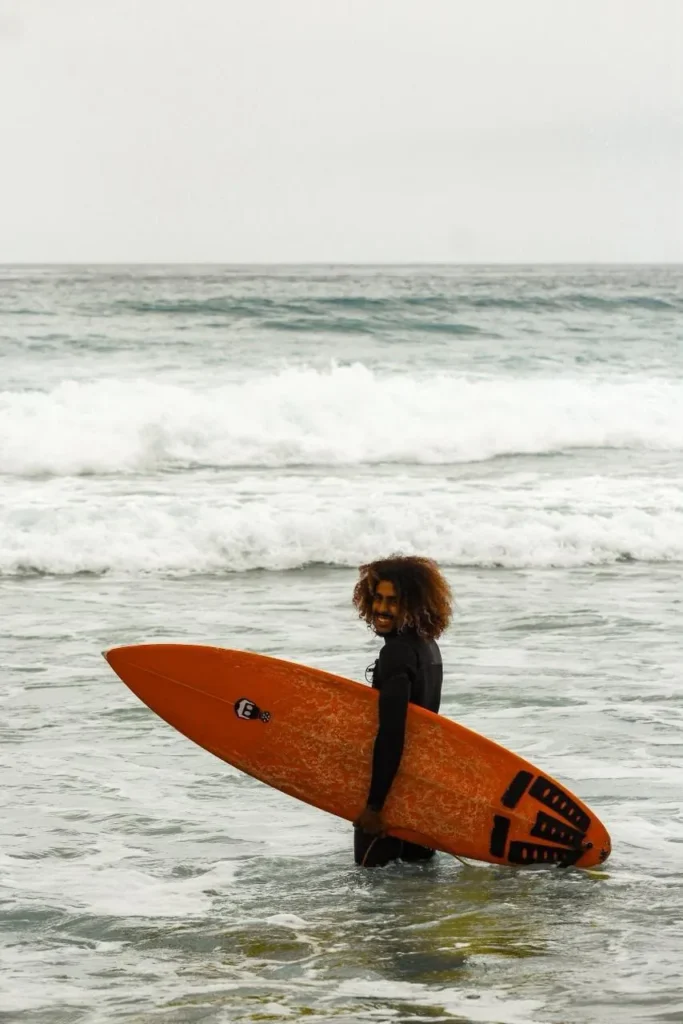
Beginners usually start on large soft-top boards, which are stable, float well and are much safer if you fall.
What your first week usually looks like
Every week is different, because the ocean decides. But a typical beginner week follows this rhythm.
Day 1: safety and basics on the sand
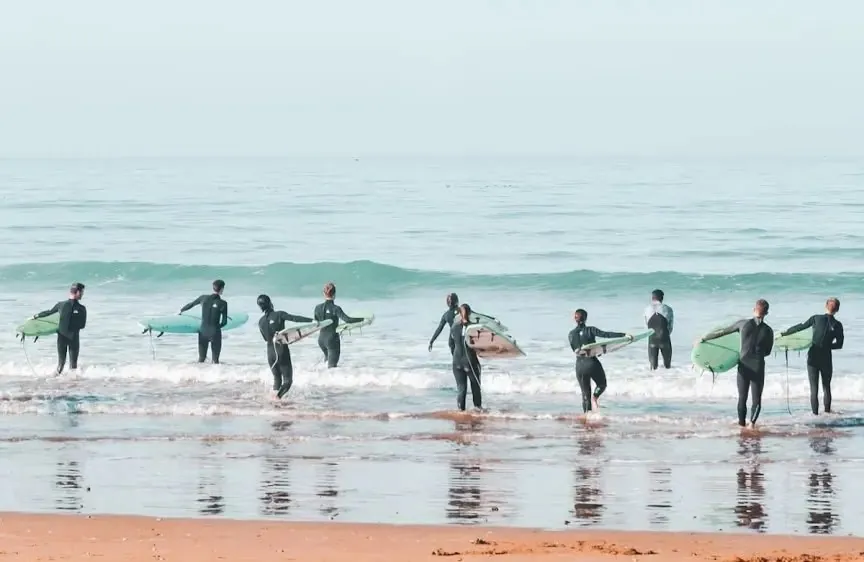
Your first lesson starts on the beach. Your instructor explains how waves break, where currents run, how to carry your board and how to fall safely. You’ll practise the pop-up, moving from lying to standing, on the sand. Then you head into the white water, the broken waves close to shore, to catch your first rides lying down.
Days 2–3: paddling, timing and first stand-ups
Paddling surprises most beginners, because it’s tiring at first. You’ll learn where to lie on the board, when to start paddling and how to feel the wave pick you up. Many beginners manage their first short stand-up rides during these sessions. Expect sore shoulders; it’s normal and eases as your body adapts.
Days 4–5: building consistency
The goal shifts from “can I stand up?” to “can I do it again?” You’ll work on a smoother pop-up, keeping your weight centred and riding further. Stretching or yoga helps tired muscles recover.
Days 6–7: confidence and choosing your own waves
By the end of the week, many beginners are choosing their own waves in the white water and starting to angle along them. Some are ready to try small unbroken waves with an instructor. Others are still consolidating, and that’s fine. Surfing rewards patience.
Common beginner mistakes and quick fixes
- Standing up too slowly: practise the pop-up on the sand between sessions.
- Looking down at the board: look towards the beach, where you want to go.
- Lying too far back or forward: aim for the nose sitting just above the water.
- Paddling too late: start paddling before the wave reaches you.
- Standing with straight legs: bend your knees and keep a low, wide stance.
How to progress faster
- Surf several days in a row. Repetition builds muscle memory quickly.
- Combine lessons with practice time. Lessons give you technique; practice turns it into habit.
- Rest properly. Tired surfers make more mistakes and catch fewer waves.
- Eat and sleep well. Surfing uses more energy than most people expect.
- Ask for feedback. One small correction from an instructor can make a big difference.
Staying safe as a beginner
- Always surf where your instructor tells you, inside the beginner area.
- Keep your board between you and the waves when walking out.
- Protect your head with your arms when you fall.
- Never surf alone in your first week.
- Respect flags, instructions and other water users.
Recovery between sessions
Your afternoons matter as much as your surf time. Rest in the shade, stretch, drink water and eat well. Light activities such as yoga or a gentle walk help your body recover. If you’d like to practise balance off the water, a skate lesson is a fun option.
When is the best time for beginners to learn?
The main surf season runs from about October to April, when swells are biggest. Beginners can learn year-round on the right beaches, and many find spring and autumn ideal, with smaller waves and warm days. Our month-by-month guide to surfing in Taghazout and Agadir explains the seasons in detail.
Choosing a beginner-friendly surf trip
Look for a camp that offers proper lessons rather than just board rental, provides soft-top boards and wetsuits, and takes you to beaches that suit beginners. Packages that combine lessons with extra time in the water work well. For example, at Coastal Haven in Aourir you can choose between a lesson-based package or daily sessions.
Frequently asked questions
Can a complete beginner learn to surf in a week?
Yes. Many beginners stand up in the white water within their first few sessions, and by the end of the week they’re catching waves more consistently. Progress depends on fitness, conditions and time in the water.
Do I need to be fit to learn to surf?
You don’t need to be very fit, but surfing is physical. Paddling and getting up from the board are tiring at first, and your fitness improves quickly over the week.
What surfboard should beginners use?
Large soft-top boards are best for beginners, because they’re stable, float well and are safer when you fall.
Is Taghazout good for beginners?
Yes. The area has beginner-friendly beach breaks as well as famous point breaks for experienced surfers.
How many lessons do beginners need?
Two or three lessons give you the foundations, and extra practice sessions help you build consistency.
Start your surf journey
Learning to surf takes patience, but the first wave you ride standing up is worth it. If you’re planning your first week near Taghazout, take a look at our beginner-friendly packages or ask us any questions on WhatsApp.