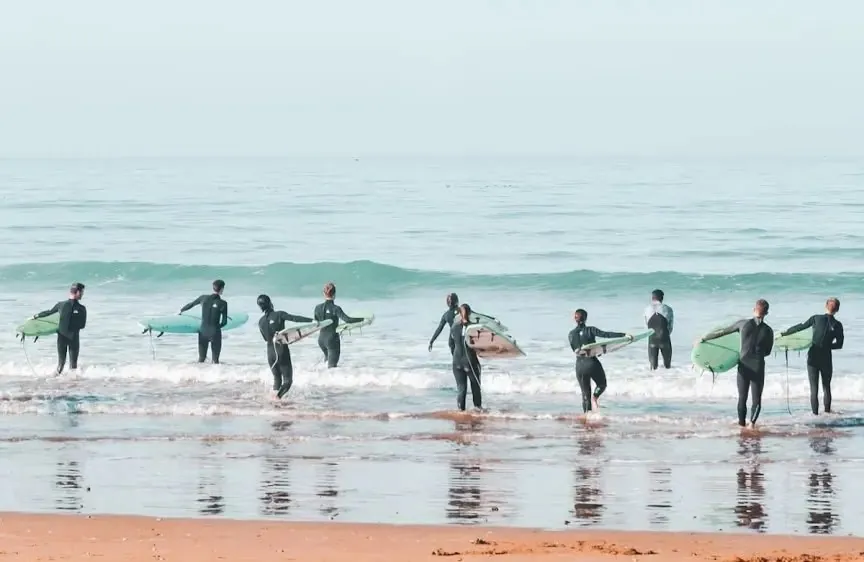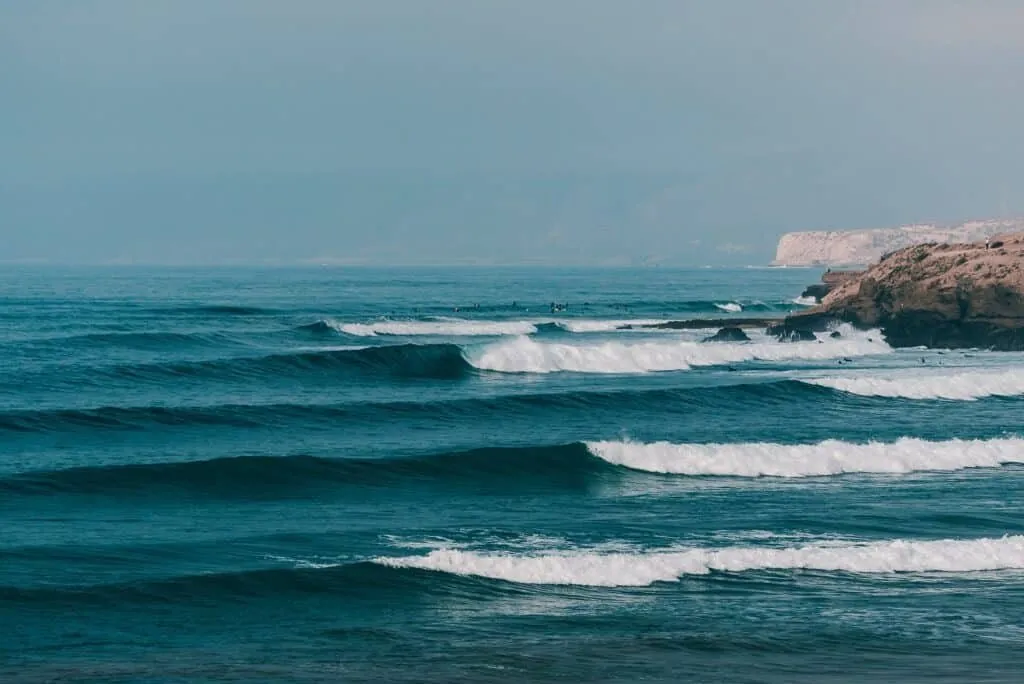
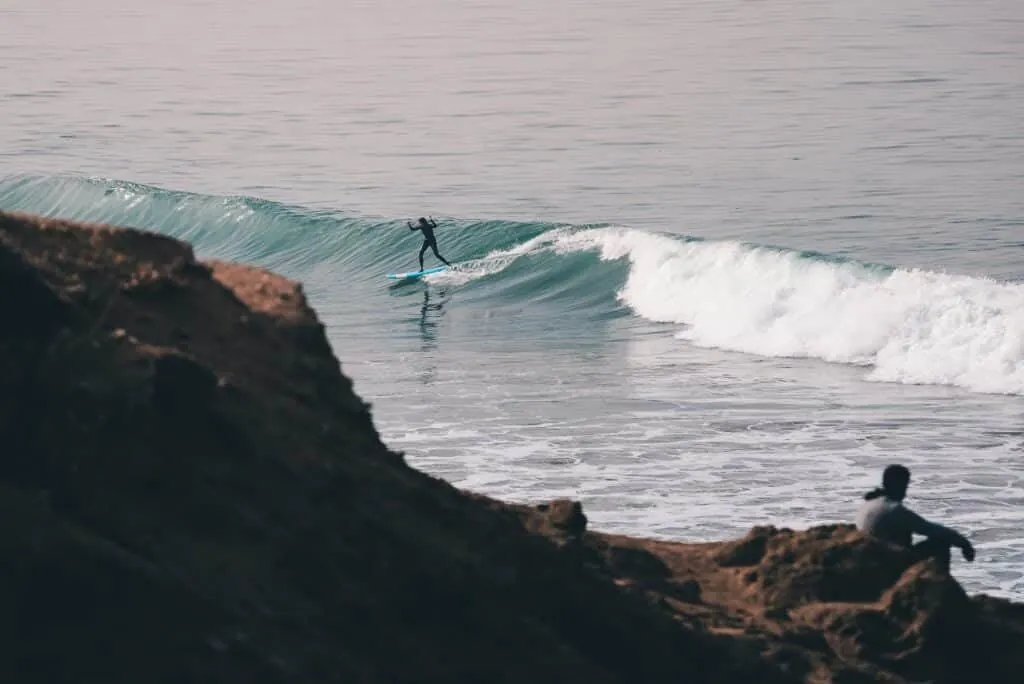
The best time to surf in Taghazout and Agadir is from October to April, when Atlantic swells are most consistent and the famous point breaks come to life. December to February usually brings the biggest and most regular waves, which suits intermediate and advanced surfers. Beginners can learn all year, and many find spring and autumn ideal, with smaller waves, warm days and fewer crowds.
Here’s how the surf season works on this coast, month by month, plus water temperatures, wetsuit advice and how to choose the right time for your level.
The surf season at a glance
| Season | Months | Waves | Best for |
|---|---|---|---|
| Main season | October to April | Most consistent swell; point breaks working | Intermediate and advanced; beginners on beach breaks |
| Peak winter | December to February | Biggest, most regular waves | Experienced surfers |
| Shoulder season | April to May, September | Smaller, mixed swell; quieter | Beginners and improvers |
| Summer | June to August | Generally smaller surf; warmer water | Beginners, longboarders, families |
These are general patterns. Every season has exceptions, so always check the forecast close to your trip.
Month-by-month guide
January and February
The heart of winter. Swells are usually at their most consistent, and the point breaks around Taghazout and Aourir are often at their best. Mornings can be cool, but days are mild and often sunny. Experienced surfers love this period; beginners still learn on sheltered beaches with an instructor.
March
Still in the main season, with good swell and longer days. A great all-round month for most levels.
April
The season begins to soften, with more small and medium days. Good for improvers who want to progress on friendlier waves.
May
Typically a quieter shoulder month, with smaller waves and warm weather. A comfortable time for beginners.
June, July and August
Summer usually brings smaller surf, warmer water and more wind on some days. Beach breaks can still give fun waves for beginners and longboarders, and the coast is busy with holiday visitors. Expect more flat spells than in winter.
September
The transition back towards winter. Swells start to return, the water is still warm and the line-ups are often quieter. A good month for beginners and intermediates.
October and November
The main season begins. Swell becomes more consistent and the points start working again. A popular time for surfers of all levels.
Water temperature and what wetsuit to bring
Water temperatures here are moderate. Sources commonly give roughly 16–20°C in the main season and warmer in summer, around 19–22°C. As a general guide:
- Winter: a full 3/2 mm wetsuit is commonly recommended, with some surfers preferring a 4/3 mm in the coldest weeks.
- Spring and autumn: a 3/2 mm full suit usually works well.
- Summer: many surfers are comfortable in a shorty or a light suit.
If you’re on a surf package, check whether a wetsuit is included before packing your own.
Weather on land
The coast around Agadir and Taghazout is known for its mild, sunny climate. Winter days are usually pleasant, though mornings and evenings can feel cool, so bring warm layers for after your surf. Summer days are warm, and a sea breeze often keeps the coast comfortable. Whatever the month, sun protection is essential, because the sun reflects strongly off the water.
Best time by surf level
Beginners
You can learn all year, because instructors use beginner-friendly beach breaks. Many beginners enjoy spring, early summer and autumn, when waves are smaller and days warm. Read what a beginner’s first week near Taghazout looks like.
Intermediate surfers
October to April gives access to the point breaks on suitable days, with plenty of medium-sized waves to progress on. A local guide helps you find the right spot for the conditions.
Advanced surfers
December to February generally brings the most powerful and consistent waves at the famous points around Taghazout.
Crowds and atmosphere through the year
The main season is the busiest time in the water, especially at the famous points on good days. Spring and autumn are often calmer, giving beginners more space. Summer brings more beach visitors, though surfers are usually a smaller share of the crowd.
How to read a surf forecast for this coast
- Swell height and period: bigger, longer-period swells reach the point breaks; smaller swells suit the beaches.
- Swell direction: this coast generally favours swell from the northwest.
- Wind: light offshore wind gives clean waves; strong onshore wind makes them messy.
A forecast is a guide, not a guarantee. Local surfers and guides watch the waves each morning before deciding where to go.
Planning tips
- Book early for winter and holidays: the main season is the busiest time to travel.
- Stay at least a week if you can: more days mean more chances of good conditions.
- Be flexible: let the day’s swell, wind and tide decide where you surf.
- Stay somewhere central: basing yourself between Agadir and Taghazout, for example in Aourir, makes it easy to reach different spots. Our Banana Point guide covers one of the nearby breaks.
Frequently asked questions
What is the best month to surf in Taghazout?
For consistent swell, December to February are usually the best months. The wider main season runs from October to April.
Can you surf in Morocco in summer?
Yes. Summer usually has smaller waves and warmer water, which suits beginners and longboarders, although flat spells are more common.
When is the best time for beginners?
Beginners can learn all year on beach breaks. Spring, early summer and autumn often have smaller, friendlier waves.
Do I need a wetsuit in Taghazout?
For most of the year, yes. A 3/2 mm full suit is commonly recommended, with a shorty often enough in summer.
Is Agadir good for surfing?
Agadir’s main beach is generally sheltered, but the coast just north of the city, around Aourir, Tamraght and Taghazout, has many surf spots for every level.
Plan your trip around the waves
Whatever month you choose, the coast north of Agadir has waves for your level. When your dates are set, see surf package options in Aourir or ask us about conditions.