Banana Point is a right-hand point break in Aourir, just north of Agadir. It works best in the winter season, roughly October to April, with a northwest swell and offshore winds. On good days it produces long, peeling rights that suit intermediate surfers, while beginners are better off on the sandy beaches nearby. Conditions change a lot with swell size and tide, so it pays to check carefully before paddling out.
This guide covers where Banana Point is, what kind of wave it is, the best conditions, who it suits, and how to surf it safely and respectfully.
Where is Banana Point?
Banana Point is in Aourir, on the coast road between Agadir and Taghazout. It’s one of the closest well-known breaks to Agadir, and the surf village of Taghazout is only a few kilometres further up the coast. The beaches of Tamraght lie in between, so you can easily move between spots if conditions change.
What kind of wave is Banana Point?
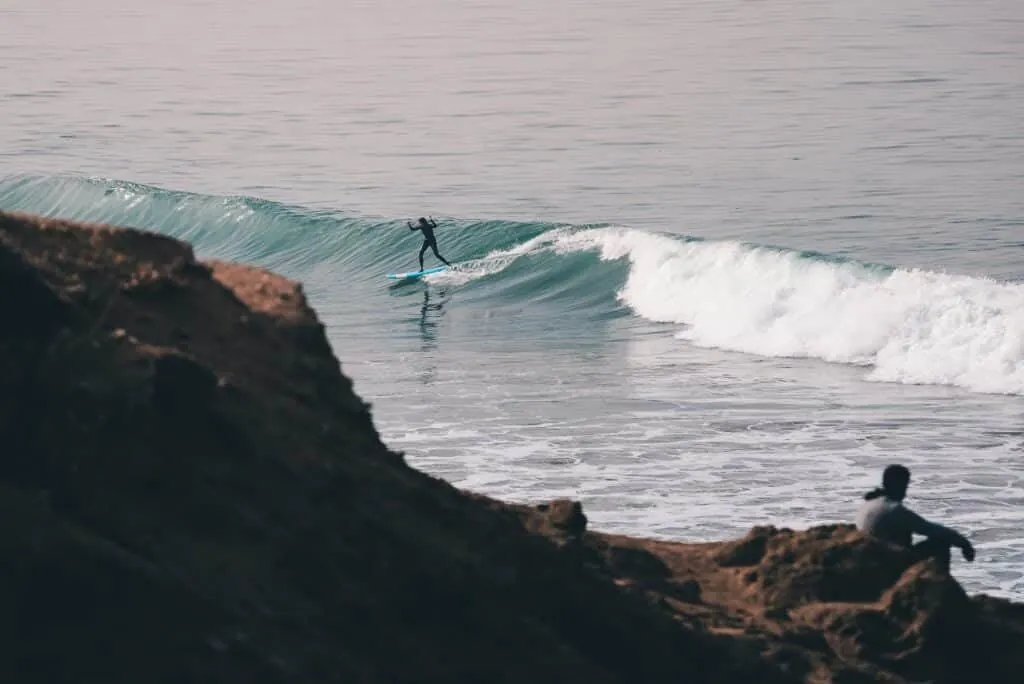
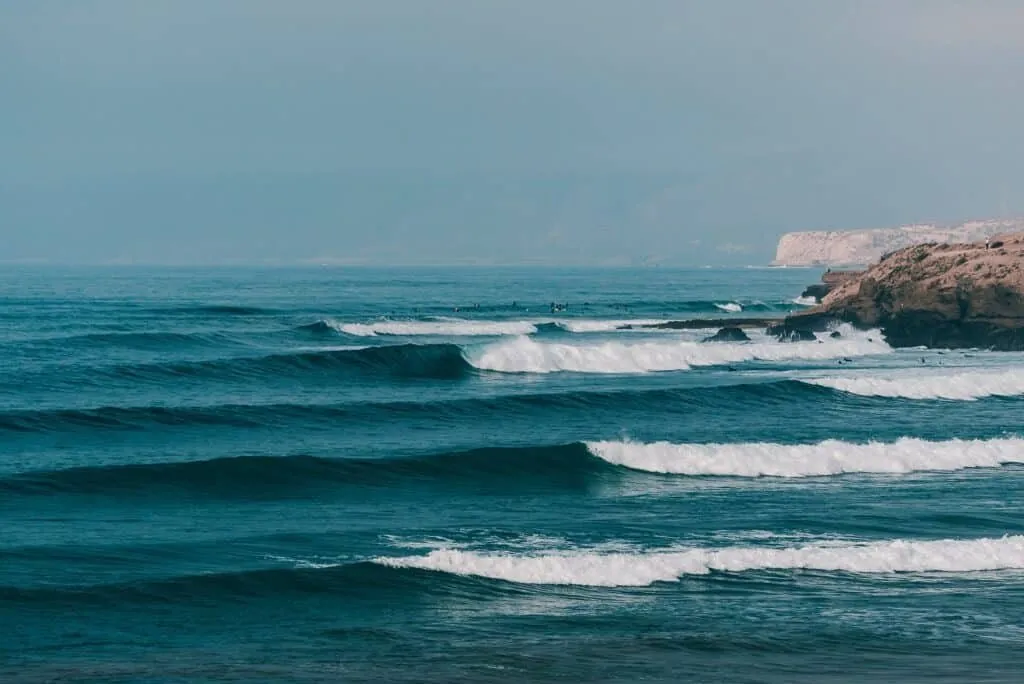
Banana Point is generally described as a right-hand point break. When a good swell wraps around the point, waves peel along it, giving long rides and space to practise turns. On smaller days it can be mellow; on bigger days it becomes more powerful and is best for confident surfers.
Next to the point, the sandy stretch often called Banana Beach has its own peaks and is treated as a separate spot. Close by, at the corner of Banana Point, there’s a reef and point section often called Spiders, described as a fast right for advanced surfers.
Best conditions for Banana Point
Season
Most surf guides agree that winter is the best time, with the main season running from about October to April, when the Atlantic delivers its most consistent swell.
Swell direction
The spot generally works best with a northwest swell, ideally mid-sized.
Wind
Offshore winds give the cleanest waves, and light offshore conditions are often found in the morning. Guides describe the ideal wind direction differently, so check the conditions on the day.
Tide
Sources disagree here. Some forecasts say it works at all stages of the tide, while local guides often suggest low to mid tide. The honest answer is that it depends on the swell size and the sandbanks, which shift through the season. Check the tide times and watch the waves before paddling out.
Who is Banana Point for?
- Intermediate surfers who paddle confidently, catch unbroken waves and can turn will enjoy the point on suitable days.
- Advanced surfers will find more challenge when the swell is bigger, and at nearby sections such as Spiders.
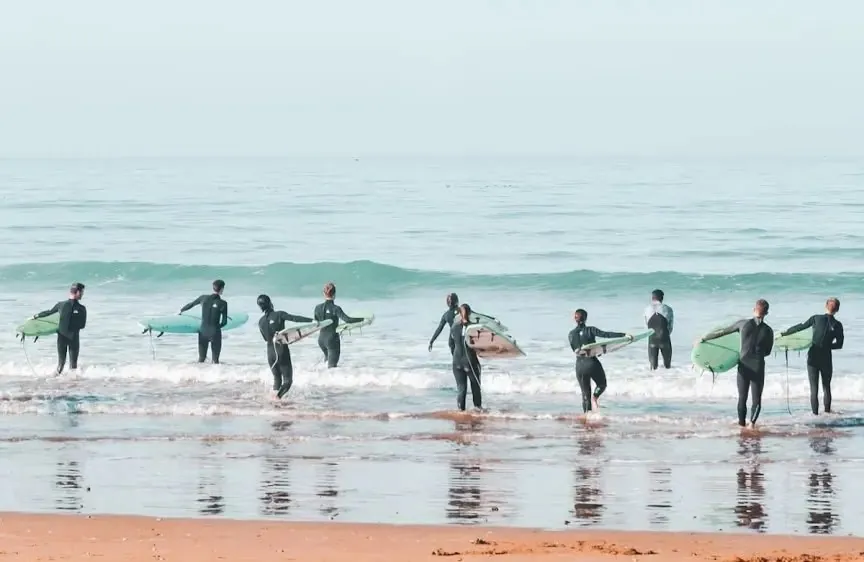
- Beginners should learn on gentler sandy beach breaks with an instructor rather than on the point itself.
If you’re unsure whether the point suits your level, surf it first with a local guide or ask experienced surfers on the beach.
How to check conditions before you go
- Check the swell size and period. A longer period usually means more organised waves that wrap better around the point.
- Check the wind. Light offshore wind cleans up the waves; strong onshore wind makes them choppy.
- Check the tide times, then watch how the waves break at that stage of the tide.
- Look at the line-up. If it’s crowded, or the sets are bigger than you’re comfortable with, choose another spot.
Safety and etiquette at Banana Point
- Watch before you paddle out: see where the waves break, where others paddle out and where the rocks are.
- Respect priority: the surfer closest to the peak has right of way. Don’t drop in.
- Know your limits: if the swell is bigger than you’re used to, choose another spot.
- Be aware of rocks and reef: take care in the shallowest sections, especially at low tide.
- Be friendly and patient: respect local surfers and you’ll be welcomed in the water.
Surfing the point for the first time
- Arrive early, when the wind is often lightest and the line-up quieter.
- Spend ten minutes watching the sets, the take-off zone and where people paddle out.
- Start on the inside or shoulder rather than the main peak, and pick smaller waves first.
- Leave plenty of space for other surfers and take your turn.
- Come in before you’re exhausted; paddling back against the current takes energy.
What to bring
- A wetsuit suited to the season (a 3/2 mm full suit covers most of the year)
- Sun protection and water, as there’s little shade by the water
- Booties if you’re unsure about the rocks
- A board suited to point waves; beginners should stick to soft-tops on the beach breaks
Other surf spots nearby
One advantage of this part of the coast is choice. Within a short drive you’ll find beach breaks around Tamraght and the famous points of Taghazout. When the wind or swell doesn’t suit Banana Point, there’s usually another spot that works. Our guide to the best time to surf in Taghazout and Agadir explains how the seasons affect the whole coast.
Staying near Banana Point
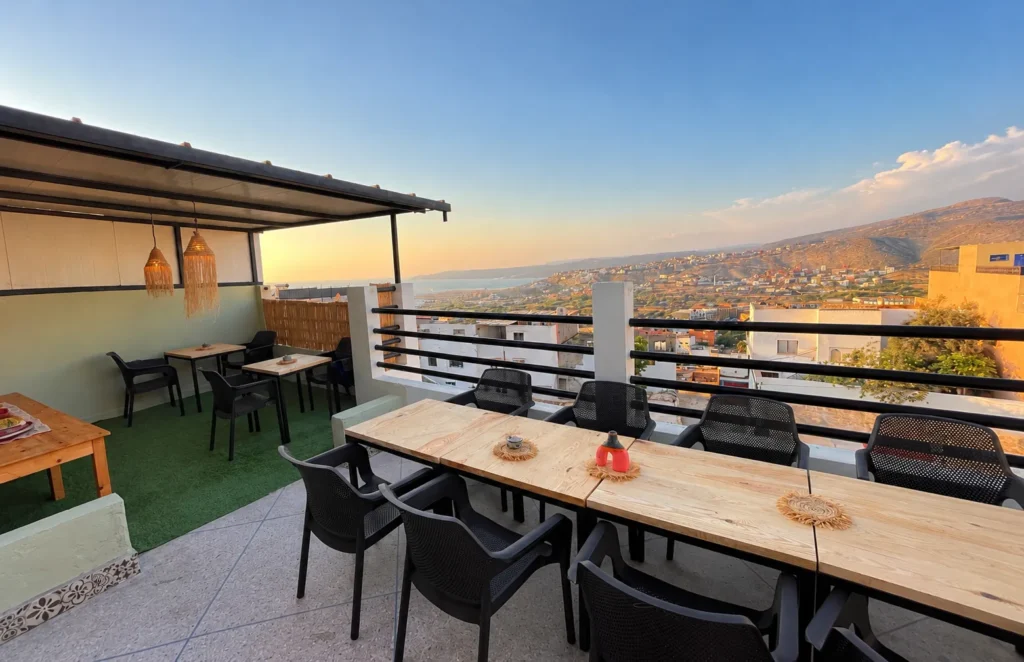
Staying in Aourir puts you close to the point while keeping Tamraght and Taghazout within easy reach. For example, Coastal Haven in the village of Tamawanza is about 900 m from Banana Point and 4 km from Taghazout Beach.
Frequently asked questions
Is Banana Point good for beginners?
The point itself is better suited to intermediate surfers. Beginners should learn on nearby sandy beach breaks with an instructor.
When is the best time to surf Banana Point?
Winter is generally the best season, within the main surf season of roughly October to April.
What swell does Banana Point need?
It generally works best with a mid-sized northwest swell and offshore winds.
What tide is best at Banana Point?
Guides disagree: some say all tides, others low to mid. It depends on the swell size and sandbanks, so check conditions on the day.
Is Banana Point crowded?
It can be on good days in the main season. Arrive early and be patient in the line-up.
Surf Banana Point with local knowledge
Banana Point rewards surfers who read the conditions well. If you’d like a base nearby and a guide who knows when it’s working, explore surf packages in Aourir.